

The Malaysia Advertisers Association (MAA) is entering a new phase of renewal with a refreshed leadership lineup aimed at driving greater inclusivity, digital innovation and collaboration across Malaysia’s evolving advertising ecosystem. Under the new appointments, Hassan Alsagoff, Regional Head of Loyalty & Marketing at Grab, has been elected Vice President for the 2025-2026 term, joining new council members Abdul Sani Abdul Murad, Group Chief Marketing Officer of RHB, and Diana Boo, Chief Marketing Officer of Boost. Their appointments, MAA said, reflect a strategic shift toward broader representation and stronger engagement between advertisers, technology platforms and financial services players, a move seen as essential in a landscape where ad spend hit RM6.1 billion in 2024, with tech-led companies driving a growing share. MAA President Claudian Navin Stanislaus said the new leadership marks a deliberate shift toward renewal and forward momentum. “Leadership is about handing over the reins with trust; empowering new voices so the association continues to stay true to its members and the industry,” he said. He emphasised that the leadership refresh, combined with MAA’s digital pivot and renewed mission, signals a new chapter for Malaysian advertising — one focused on inclusivity, agility and innovation in a rapidly changing business environment. Publish by Business Today

Man Of All Seasons, Keeps Answering The Call For Execellence
Written by The Hammer Navin spent two decades in the FMCG industry with oversight of global markets as Head of Communication & Consumer Marketing for BABA’S, Malaysia’s leading curry powder and spice brand, capturing in excess of 60% of market and achieving sales growth of over RM600mil. His collaborative projects ranged from creating and producing the first reality-TV culinary series, developing new packaging classifications and design standards, driving digital transformation, and some guerilla marketing that took larger FMCG brands like Nestlé and Knorr by storm. So when Dr Fahizah Shamsuddin, the Programme Director for Advertising and Brand at Management from Taylor’s University Lakeside Campus called him to help secure some key brands and judges for a major project, she knew she was in good hands. For Navin, it was second nature to come to the rescue and another calling to help the next generation of professionals. The ADVERT Showcase is a celebration of work done by final year students in the Advertising and Brand Management Collaborative Project. 6 student teams (agencies) spent 14 weeks working on briefs from six leading brands (clients) for the exercise and were assessed by 10 senior industry leaders (including Navin and a turbanned stranger) and the respective clients. “Sitting amidst my fellow seasoned marketers listening to the campaign presentations from the final year students at Taylor’s ADVERT Showcase recently, brought a smile to my face. More than once if I’m to be honest.” Navin Marketing to Zoomers, by Zoomers True to form, the challenge was how the students would create campaigns for their own Gen Zs, giving them a chance to shine by applying classroom knowledge in real-world brand scenarios. Navin shares, “To know that the future of our industry showed more than hints of promise was undoubtedly comforting. Admittedly, I quietly cringed at the realisation that as a parent of kids of these times I’m culpable in the curation of a generational fetish for ‘blind boxes’ (reflected in quite a few of the executions).” Challenged with real world scenarios provided by the participating brands, one team explored how to stir excitement among their peers for drinking coffee, another reinvented the cool factor of a classic fragrance brand with a campaign that seemed ready to go live immediately.Two projects peaked Navin’s interest for their choice of focus , topics many experienced marketers might deem not sexy enough to be worth the effort. The first was a campaign for the Southeast Asian Regional Centre for Counter-Terrorism (SEARCCT). “Don’t worry, you’re not alone if you’ve never heard of them!” “The team nailed it, crafting a campaign so compelling that it piqued my lunchtime curiosity and led to a few casual searches.” The second campaign was more familiar territory with a task set by the Content Forum (CMCF) to promote understanding of key tenets of the Content Code. Most ‘experts’ tasked with presenting to such bodies often opt for more professionallooking decks adorned with colours like “blue for stability” and “white for purity”, and a slew of keypoints few outside the room would actually be bothered about. What set these aspiring young marketers apart was their choice of a more captivating narrative that spoke to their own generation, plus the messaging was clear and fun. Locking the doors and windows of a house with no walls Today, we’re assailed by content at almost every single touchpoint — from flashy ads, compelling entertainment to endless streams of usergenerated posts, and of course, loads of clickbait and fake news. While much of it is harmless; if you have your wits about you, as a parent, we worry about the overwhelming digital deluge that reaches our kids – intentional or otherwise. “If the Content Code was seen as important when it was first introduced in 2004, it is ever more critical today. As digital content exponentially increases and children gain earlier access to devices, it’s ever more crucial that the content landscape remains safe, ethical and accountable.” Navin Regulatory bodies such as the Content Forum of Malaysia (CMCF), the Advertising Standards Advisory of Malaysia (ASA) and Lembaga Penapisan Filem (LPF) are pivotal in ensuring content remains ethical, legitimate, and lawful. However, these entities must continuously evolve with the rapid transformations in the content, digital and broadcast ecosystems. If they fail to adapt, they risk becoming outdated, out of place, or possibly even oppressive. What’s deemed offensive today might also become tomorrow’s norm, “Kamala is Brat” is a recent example for the US Presidential elections. Self regulation empowers the community to build their own walls. While regulators strive to protect without restricting the liberties of the public; content creators, both professional and amateur, must embrace higher ethical standards too. They must also be wary of exploiting the liberties afforded by self regulation, as the fallout might lead to severe repercussions, and potentially more rigid or oppressive circumstances. Policing without the police Turning a blind eye or deaf ear serves no one. It’s as good as being complicit. The public has to play its role in maintaining ethical content standards. Promoting good content practices, actively and visibly rejecting what’s inappropriate. Regular fact-checking, reporting of offensive content, and educating ourselves about what’s right and what not, are practical steps that we all can undertake – parents; most critically, as children are the most vulnerable to harmful content. The explosion of content has also led to a surge in misinformation, polarisation, harmful stereotyping, and hate speech, all of which can negatively impact perceptions and behaviours. As technology becomes more integrated into education, awareness of the regulations and codes that protect us should be integrated into syllabus from an early stage, much like civics. Sadly, for most codes and regulations can be a daunting read. Even when they are crafted in simplicity with the general public in mind. “But seeing a group of Gen Z future marketers effectively spread this message and ‘educate’ experienced industry professionals, with their own narrative, was a win for self regulation. Their fresh take on regulatory messaging highlighted the importance

University Students Steal the Show at inaugural MAA TRAILBLAZERS: The Ad-venture Challenge
Kuala Lumpur, May 27, 2025 – University students took centre stage at the inaugural MAATRAILBLAZERS: The Ad-venture Challenge, powered by BillUps and hosted by the Malaysian Advertisers Association (MAA), sweeping two of the top three spots, including thecoveted champion’s title. The fast-paced, “Amazing Race”-style marketing competition sawMalaysia’s brightest young marketers – many still in university – outshine agency pros andindustry veterans as they raced from challenge to challenge, putting their creativity andteamwork to the test. The champion team, ‘AiScReam’ comprising students from Sunway University, captured thejudges’ attention with their inventive strategies, quick thinking, and infectious team spirit – that bold ideas and fresh perspectives can take on the best in the business. Hot on their heels was ‘Team TD’ – another outstanding student team from Taylor’s University, claiming second place after a fierce, day-long contest. Rounding out the top three was the team from Heineken Malaysia, demonstrating that industry professionals were also very much in the running amid the fresh energy and bold ideas brought by student teams. “Seeing not one, but two university student teams take the top spots at MAA TRAILBLAZERSwas a nice twist to the day. It sends a clear message about the bright future of our industry. Butwhat brought a smile to me was seeing the full spectrum of the industry, young and senior,running around excitedly having fun, with energy and ideas, away from the confines of the wallsand boundaries that often keep us apart,” said Claudian Navin Stanislaus, President of MAA. But the win was just part of the story. MAA TRAILBLAZERS was designed to mimic the realpace and pressure of life in the marketing industry — from rapid-fire ideation to jugglingcompeting tasks and delivering ideas under client-like scrutiny, even to knowing the regulationsthat govern it. While the competition was fierce, the day was essentially about having fun,learning new skills, but more importantly building connections. For participants, the real adventure began the moment they piled into their assigned cars –maps in hand, clues on their phones, laughter and nerves mingling as they sped off to secret locations across town. Each pit stop brought a creative challenge, testing teamwork and improvisation at every turn. Teams worked together on the fly, pushing creative boundaries as they moved from challenge to challenge—fighting their way up the leaderboard, mirroring the high-energy atmosphere of the industry. The competition also saw lucky teams draw a mentor each, as Abdul Sani bin Abdul Murad (RHB Banking Group), Chan May Ling (CelcomDigi), Hassan Alsagoff (Grab), and Schrene Goh (MRT Corp), who provided guidance, encouragement, and were active members of the team. For many, it was a rare opportunity to not just get up close with Malaysia’s marketing movers, shakers, icons and bosses, but to see them in a different light — as colleagues and friends — without boundaries of hierarchy or domain. The event wrapped with an awards ceremony that celebrated not just the winning team, but all the MAA TRAILBLAZERS who stepped up and gave their all. MAA TRAILBLAZERS: The Ad-venture Challenge reflects MAA’s commitment to nurturing the next generation of marketers, encouraging creativity, and building future-ready advertising talent. The event was made possible thanks to the support of title sponsor BillUps. The world’s largest independent OOH agency, saw the value in building something new that brings the people in the industry back together. It was its first-of-its-kind format and its people-focused objective that appealed to the other sponsors like AEON, Coca-Cola, Grab, Heineken Malaysia Berhad, Nestle, Spectrum Outdoor and KL Wellness City too. Together they helped make the event not just an unforgettable experience, but a great start of something new. Building on this momentum, MAA looks forward to welcoming even more young marketers and creative thinkers to participate in defining the industry into one that evolves and resonates with them – and not be held back by doing the same old things just because that’s how it’s always been done! For more about MAA’s mission and upcoming events, visit the MAA website at malaysiaadvertisers.com.my or connect with us on LinkedIn.
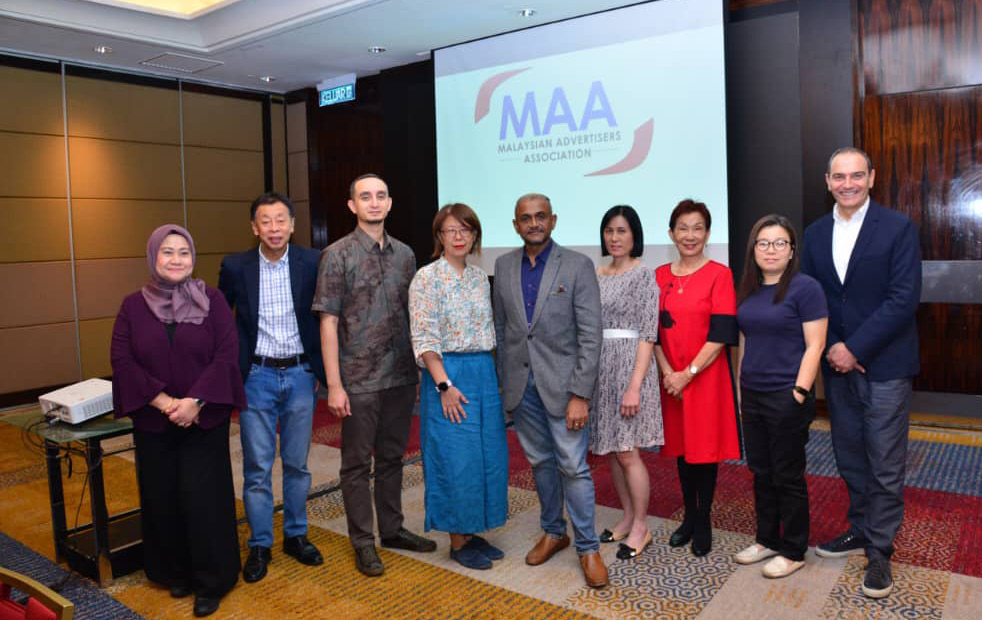
Claudian Navin re-elected as MAA president
PETALING JAYA: Claudian Navin Stanislaus has been re-elected as the Malaysian Advertisers Association (MAA) president at the association’s recent Annual General Meeting. Foong Ai Peng also retained her position as vice-president at the event. Their reappointment comes with an overwhelming endorsement from members, reflecting widespread confidence in their leadership. The duo is committed to advancing the transformative agenda set during the previous term to enhance the landscape for advertisers across Malaysia, MAA said in a statement. Building on the successes of their initial term, Navin unveiled plans for the new council, charged with driving the association’s strategic vision and fulfilling its commitments. This council, an assembly of seasoned experts and innovative thinkers from diverse sectors, aims to collaborate closely with the executive team to address key challenges, inspire innovation and steer the industry toward a prosperous future. The council members consist of various companies which include Coca-Cola Far East Ltd, Danone Specialised Nutrition Malaysia Sdn Bhd, Genting Malaysia Bhd, Grab Taxi Holdings Pte Ltd, Heineken Malaysia Bhd, Mondelez Malaysia Sales Sdn Bhd, Nestle Products Sdn Bhd, Tune Group Sdn Bhd and Unilever (M) Holdings Sdn Bhd. “We are humbled by the re-election and the trust and assurance our members place in our vision and unwavering commitment to serve their interests. The establishment of the new council is a pivotal step in intensifying our efforts to deliver impactful changes and significant advancements. Our agenda for the next term is focused on solidifying the groundwork laid previously while also embracing innovative collaborations and advancements for the betterment of our members and the industry as a whole,” Navin said. Addressing the challenges of the current climate, the MAA has strategically supported its members by enhancing knowledge through a series of targeted micro-events, designed to keep members well-informed without imposing additional burdens. Foong reiterated the significance of unity and collaborative effort in realising the association’s objectives. “As we commence this new term, we acknowledge the forthcoming challenges and the critical need for solidarity in surmounting them. The formation of this council is a testament to our dedication to inclusivity, diversity and our collective endeavour for a brighter future for all members,’” she noted. Further illustrating the association’s proactive approach, Navin highlighted recent collaborations with institutes of higher learning (IHL) and small and medium enterprises through its IHL and affiliated member programmes, respectively, which also expands opportunities in research and job placement. Originally posted on The Star Online

The paradox of ethical creativity
PETALING JAYA: In the heart of the Louvre Museum in Paris, among a collection that commands awe and admiration, the Mona Lisa holds court. With a modest size of 30 by 21 inches, this masterpiece defies the notion that bigger is always better, symbolising the profound potential of creativity to flourish under constraint. Leonardo da Vinci, with his enigmatic creation, has long stood as a testament to the idea that limitation can indeed be the mother of innovation. This narrative of constrained creativity is not just a relic of the Renaissance but resonates deeply in today’s world, especially within the realms of marketing and content creation. The modern creative landscape, much like da Vinci’s canvas, is bound by regulations and guidelines. In Malaysia, content creators navigate through a labyrinth of nearly 40 different regulations, including the Malaysian Code of Advertising Practice (MCAP) and the Content Code, which might seem to curtail creativity at first glance. However, these regulatory frameworks are not the shackles they appear to be, but rather scaffolds upon which ethical integrity and artistic ingenuity can combine into masterpieces of marketing. Commenting on the regulatory frameworks, Malaysian Advertisers Association president Claudian Navin Stanislaus told StarBiz the MCAP and the Content Code serve as ethical compasses, guiding creators through the complexities of legality, decency and truthfulness, while also embedding the rich tapestry of Malaysia’s cultural values into their work. “For consumers, these codes ensure protection from misleading information and uphold cultural values, fostering an environment where trust in content and, consequently, the brands behind them is strengthened. For brands and content creators, these guidelines lay the groundwork for fair competition and ethical practices, enhancing brand image and mitigating legal risks. This synergy between consumer protection and ethical branding fosters a marketing ecosystem where trust, integrity and innovation can thrive, improving the dynamics between consumers and brands in the country’s diverse market,” he added. Stanislaus said the debate on whether these regulations hinder or help creativity is becoming increasingly irrelevant as today’s consumers, more informed and vocal than ever, scrutinise how brands operate. This scrutiny is not just a hurdle but an opportunity for creators to delve deeper into their craft, embracing regulations as a canvas to paint their visions of ethical and resonant marketing narratives, he said. The parallel drawn between the confined canvas of the Mona Lisa and the regulated creative landscape serves as a poignant reminder that true creativity doesn’t require boundless freedom. Stanislaus said real ingenuity and skill lie in crafting compelling narratives and campaigns that resonate within the confines of ethical and regulatory compliance, much like how da Vinci captured an enduring legacy within the fixed dimensions of his iconic painting. “As we navigate the complexities of creativity within the boundaries of regulations, codes, ethics and principles, we should see these not as limitations but as opportunities to elevate our creative endeavours. “By embracing these constraints, we can craft stories and solutions that resonate on a deeper level, imbued with novelty and dignity, leaving legacies that, like da Vinci’s masterpiece, stand the test of time. “The challenge for brands and content creators in Malaysia and beyond is thus not about the restrictions imposed by the external canvas, but about transcending the limitations of our own creativity. “This invites us to question not the constraints we face, but the boundlessness of our imagination and our willingness to explore it fully. “In doing so, we may discover that our greatest creations come not in spite of constraints, but because of them (constraints),” Stanislaus added. Publish by The Star Online
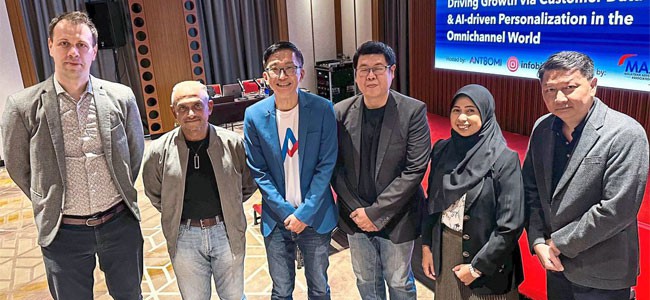
MAA continues to back brands and marketers
KUALA LUMPUR: The Malaysian Advertisers Association (MAA) concluded its latest Education Series event, the much-anticipated first of the year, themed “Driving Growth via Customer Data and Artificial Intelligence (AI) driven Personalisation in the Omnichannel World.” This exclusive members only seminar, curated specifically with Malaysian brands in mind, was held at the One World Hotel in Petaling Jaya recently. The event brought together regional expertise from the marketing technology (martech) sector to explore the future of data-driven marketing amidst the shifting landscape of policy changes, technological innovations and most critically, the evolution of customer engagement. MAA president Claudian Navin Stanislaus highlighted that the event was part of the association’s ongoing effort to evolve into a resource and support system for brands and marketers in Malaysia, to cope and compete in this challenging ecosystem. “We are constantly on the lookout for topics and expertise that are on the fringes or exploratory part of marketing rather than just what’s trending and formats that are more peer to peer, casual and conversational, so that our members have actual actionable paths to consider, or at least know the questions they should be asking,” he added. The event’s narrative was clear from the onset, to galvanise brands into embracing the transformative power of data-driven strategies. It highlighted the significance of creating meaningful connections with customers through insightful data utilisation, focusing on harnessing the potential of customer data platforms (CDPs). It also highlighted exploring the evolution of conversational experiences that can resonate at a deeper level with customers, both essential for mastering the complexities of today’s omnichannel marketing world. In collaboration with Antsomi and Infobip, the event featured a panel of speakers from both the martech and brands side of the equation that included Serm Teck Choon (co-founder and CEO of Antsomi), Matija Kapic (head of solution engineering Asia at Infobip), Eddie Lee (co-founder of Love18 Chocolate) and Navin, each sharing their unique perspectives on the potential of technology and actionable insights respectively. Imagine a world where every customer interaction is like a piece of a 3D puzzle: unique, nuanced. Serm’s presentation highlighted the technique of assembling this puzzle together to create a 360-degree view of each customer, essential for delivering a cohesive seamless omnichannel experience. To bring this concept to life, he used a compelling case study from Vietnam, effectively showcasing the transformative integration of customer data and AI in curating highly personalised customer journeys. Antsomi, is a regional martech company with clients in several countries in South-East Asia. Kapic’s insightful segment delved into the art of crafting engaging conversational experiences that resonate and stick with the customer long after they’ve ended. Infobip is a global cloud communications platform that enables businesses to build connected experiences across all stages of the customer journey. He emphasised their integral role throughout the customer journey and how technology is evolving to enable the fluidity of the narrative – to one that extends beyond transactional interactions. A panel discussion brought together industry experts from martech and the brand side of the equation to explore the evolution of customer data management solutions. It also explored the increasing role of insight-driven customer experiences that underscores the transformation in treating customer data – not just as information, but as a valuable asset that can significantly impact actionable business growth. The key takeaways distilled from the event highlighted the need for a comprehensive commitment from different stakeholders within an organisation when adopting data-driven strategies. It is a continuous effort, but the impact on business outcomes, though not immediate, can be significant over time. The event also illuminated the profound impact of melding CDPs with conversational experience solutions that is becoming increasingly critical for businesses to thrive in the intricate world of omnichannel marketing. MAA, Antsomi and Infobip contributed valuable insights during this seminar. MAA will continue to pursue and foster collaboration among brands in Malaysia, with solutions and providers to bridge the gaps in the local marketing sector. The association will also explore potential applications for innovation and technology in demystifying consumer behaviour and how to resonate with them effectively. Navin concluded by saying: “This event is not just a forum of discussion, it is the genesis for marketers to elevate their omnichannel marketing strategies, harnessing the power of customer data and AI-driven personalisation. “The integration of CDPs and conversational experiences marks a seminal shift in the way businesses engage and nurture their customer base. “From the queries and feedback, not only is there growing interest on the topic, but also that there will be a need to look at regular updates in the area due to the rapid scale of its evolution”. MAA stands at the forefront of the Malaysian marketing and advertising landscape, championing the interests of a diverse spectrum of brand owners and acting as a unified voice for the industry. Originally posted on The Star Online